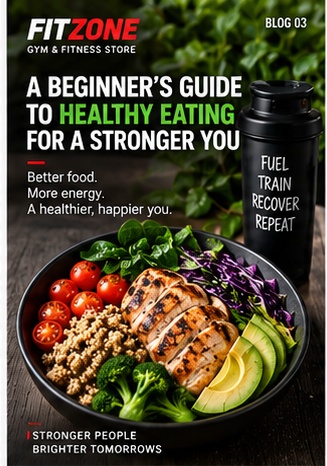
Walking into the gym is only one part of a healthy lifestyle.
What you eat throughout the day also matters.
Your body needs energy and nutrients to support everyday activities, exercise, recovery, and normal bodily functions. But healthy eating doesn’t have to mean following an extreme diet or eating the same boring meals every day.
The goal should be to develop eating habits that are balanced, practical, and sustainable.
Start With the Basics
Before worrying about complicated nutrition plans, understand the basic components of a balanced diet.
Your meals can include:
- Protein
- Carbohydrates
- Healthy fats
- Vegetables
- Fruits
- Adequate fluids
The exact amount you need depends on factors such as your body, activity level, goals, and overall diet.
That’s why there isn’t one perfect meal plan that works for everybody.
Why Protein Matters
Protein is an important nutrient for maintaining and repairing body tissues, including muscle.
If you’re regularly strength training, getting enough protein should be part of your overall nutrition strategy.
Protein sources can include foods such as:
- Eggs
- Fish
- Chicken
- Dairy products
- Beans
- Lentils
- Soy foods
- Other suitable protein-rich foods
You don’t need to make every meal complicated.
Simply becoming more aware of your protein intake can be a useful starting point.
Don’t Be Afraid of Carbohydrates
Carbohydrates often receive unnecessary criticism in the fitness world.
But carbohydrates can provide an important source of energy, particularly for people who exercise regularly.
Examples include:
- Rice
- Oats
- Potatoes
- Fruits
- Whole grains
- Other grain-based foods
The better question isn’t “Are carbohydrates bad?”
Instead, consider:
What foods am I eating, how much am I eating, and how does my overall diet fit my goals?
Include Fruits and Vegetables
Fruits and vegetables provide vitamins, minerals, fiber, and other useful nutrients.
Try to include a variety of colors and types throughout your week.
You don’t have to completely change your diet overnight.
Start by adding one additional serving of vegetables or fruit to your day.
Then build from there.
Hydration Matters
Water is easy to overlook.
You might remember your workout, your protein shake, and your meal—but forget to drink enough throughout the day.
Make hydration a regular habit.
Keep a reusable bottle with you at work, at the gym, and while travelling.
Don’t Chase Extreme Diets
One of the biggest problems with fitness culture is the constant search for a quick solution.
You may see:
- Extremely low-calorie diets
- “Detox” programs
- Rapid weight-loss promises
- Elimination diets
- Extreme fasting schedules
Some dietary approaches may have legitimate uses in particular circumstances, but extreme approaches aren’t automatically better.
For most people, developing sustainable eating habits is more useful than constantly starting another restrictive diet.
Plan Your Meals
Planning doesn’t mean preparing 30 identical meals every Sunday.
It can be as simple as knowing what you’re going to eat tomorrow.
Keep convenient nutritious options available.
For example:
- Eggs
- Fruit
- Yogurt
- Vegetables
- Rice
- Oats
- Lentils
- Chicken or other suitable protein sources
When nutritious options are available, you’re less dependent on whatever happens to be convenient at the last minute.
What About Cheat Meals?
You don’t need to label foods as completely “good” or “bad.”
A healthy lifestyle can include foods that you simply enjoy.
The important thing is your overall eating pattern.
One restaurant meal doesn’t erase months of healthy habits.
Likewise, eating one salad doesn’t transform your health overnight.
Think in terms of patterns rather than individual meals.
Nutrition and Your Fitness Goals
Different people have different goals.
You might want to:
- Build muscle
- Lose body fat
- Improve athletic performance
- Increase strength
- Improve general health
- Maintain your current weight
Your nutrition strategy should reflect your individual circumstances.
If you have a medical condition, specific dietary requirements, or significant nutrition concerns, consider speaking with a qualified healthcare or nutrition professional.
Final Thoughts
Healthy eating doesn’t have to be perfect.
It needs to be sustainable.
Start with simple changes.
Eat balanced meals.
Get appropriate protein.
Include fruits and vegetables.
Stay hydrated.
Plan ahead.
And most importantly, don’t give up because you had one less-than-perfect meal.
FitZone Tip: Your goal isn’t to eat perfectly for one week. Your goal is to build habits you can continue for years.
Train at FitZone. Fuel your body. Build a healthier lifestyle.